Mary Shelley’s Frankenstein, or The Modern Prometheus, was published over 200 years ago, in 1818. The novel tells the story of scientist Victor Frankenstein, who’s successful, yet short-sighted, project to create sentient life has tragic consequences for both creator and creature alike. Whilst Frankenstein creates life, in the form of the unnamed creature, he is horrified at the sight and flees his laboratory, thereby, abandoning the creature to the elements. The creature is intelligent and emotionally sensitive, and seeks companionship, but is rejected by human society, seeking vengeance against his creator.
The novel is considered a pivotal work of English Literature spanning different genres and defying neat genre classification. Frankenstein has been described as Gothic horror, science fiction, as well as an epistolary novel. In fact, the novel is considered one of the first works of science fiction and is certainly the first to be embedded within the English literary canon. More so, the romantic period, in which the novel was written and published, coincided with the Industrial Revolution, which followed rapid scientific advancement. Therefore, for Shelley, it wasn’t outside the realm of plausibility to think a corpse might be soon reanimated.
The novel has been adapted countless times and is one of the most adapted novels in English Literature. Over 400 feature films feature some version of Frankenstein’s creature. The titular creator “Frankenstein”, however, is in fact often referred to as the creature who is nameless in Shelley’s original novel. But why has this misattribution, or mutation, occurred?
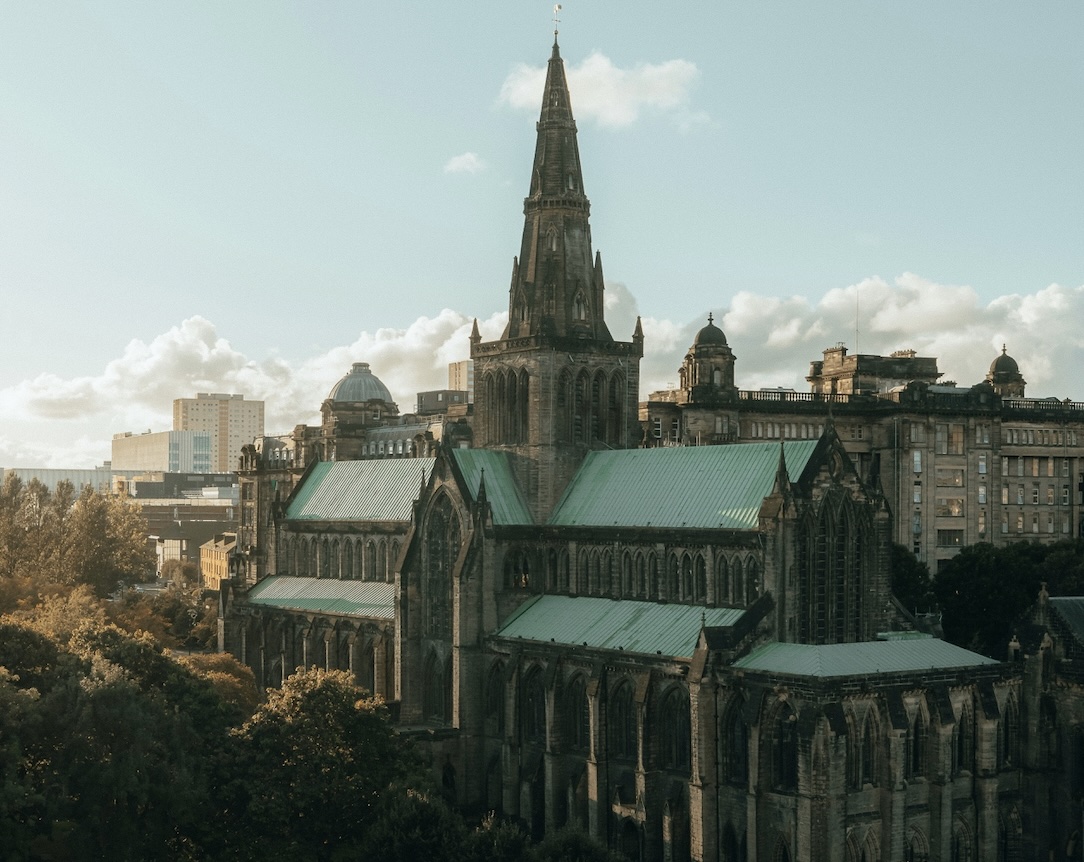
This mutation arises from the seemingly endless proliferation of Frankenstein adaptations, in which the name Frankenstein is attributed to the creature, and so this has been embedded within the public imagination. Frankenstein has been adapted numerous times for the stage and screen with some of the most famous adaptations being earlier films such as Frankenstein (1931) and Bride of Frankenstein (1935) or the later satirical cult classic Rocky Horror Picture Show (1975). Frankenstein was even adapted into a 2007 musical. However, younger generations will be more familiar with recent film adaptations such as romantic comedy, Lisa Frankenstein (2024), and Guillermo Del Toro’s highly anticipated Frankenstein (2025), some of which was filmed in Scotland, such as in the Glasgow Cathedral.
What renders Mary Shelley’s magnum opus so enduring?
Additionally, Frankenstein has inspired several other literary works, such as Poor Things, published in 1992 by Scottish author Alasdair, as a postmodern retelling of Frankenstein in which the creature is a woman. But why do writers keep returning to Frankenstein? What renders Mary Shelley’s magnum opus so enduring?
The literary context in which Frankenstein was written is doubtlessly fascinating, as Shelley wrote the novel at just eighteen, as the winning entry to an 1816 writing contest, hosted by Lord Byron, whilst residing off Lake Geneva in Switzerland with several other famous writers. But this context, beyond English Literature students, has not extended to public awareness.
Aside from Frankenstein being groundbreaking- as one of the first science fiction novels, synthesising a range of different genre conventions- despite boasting under 300 pages Frankenstein has a litany of themes that ask timeless philosophical questions, therefore, rendering the text still so pertinent today. Frankenstein considers questions fundamental to our existence such as: What makes us a human being? Whilst, equally, interrogating how human beings are socialised and the social roles within society.
What if creation was a masculine or patriarchal (as opposed to a feminine) act?
Frankenstein, therefore, within its subtext, questions our treatment of marginalised groups, such as women. Many literary scholars assert that Frankenstein can be interpreted as a feminist or even radical text. More so, Frankenstein examines the notion of creation by asking what the consequences of creation without procreation are, what are the creator’s responsibilities to their creation are, and what if creation was a masculine or patriarchal (as opposed to a feminine) act?
In the over 200 years since Frankenstein was written, we still don’t have an answer, and nor will we ever. The sheer volume of subtext and multifaceted themes within Frankenstein, as well as the futility of any attempts to fully represent the answers to the questions that the novel asks, lends Frankenstein to wide-ranging adaption. Del Toro’s film adaptation of Frankenstein is not the first, nor will it be the last.


Leave a Reply to LhaneHub Cancel reply