If you’re anything like me, you are sick and tired of hearing people throw around the word “scunnered.” Throughout the Scottish Parliament election campaign, it’s been the go-to shorthand to refer to people’s growing disaffection for politics and politicians alike. But while the word itself is approaching the point of mildly irritating overuse, the sentiment it captures is very real and very serious. We know that where political discontent lurks, so too does the threat of populism.
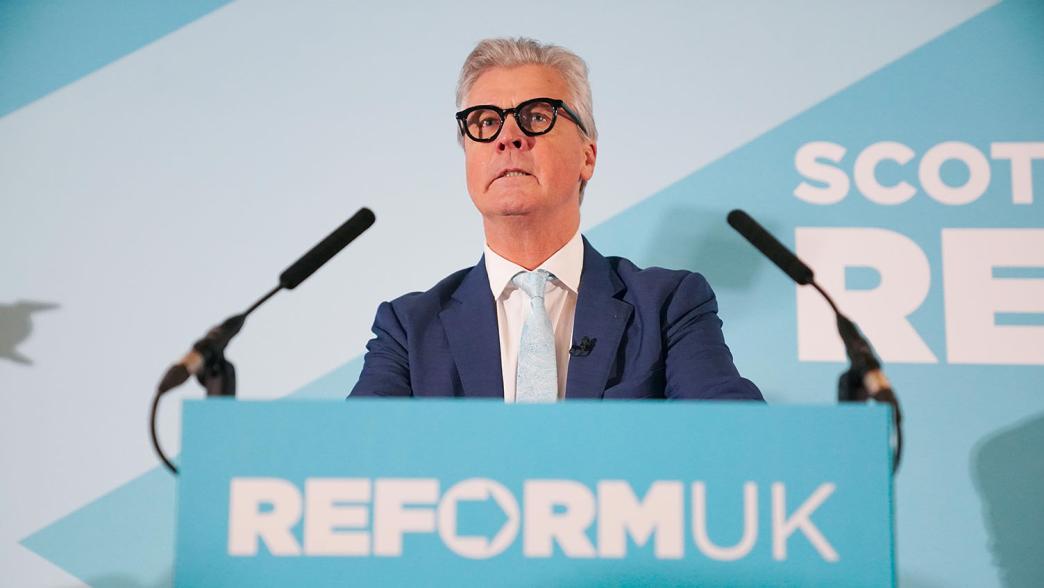
This election has seen the rapid rise of Malcolm Offord’s Reform UK Scotland, from irrelevance in the 2021 election to joint-second place with Scottish Labour this month. The entry of the first ever right-wing populist MSPs in the Scottish Parliament is a startling challenge to Scotland’s progressive consensus, begging the question of how it should respond.
There are two ways to dismantle an insurgent populist threat. Firstly, you can eliminate the underlying causes of support for the party. This is usually some form of economic insecurity: people feeling left behind and neglected by the system. To resolve that, we have to fix the economy, and anyone telling you they can fix the economy overnight is either a liar or a politician. In the short to medium term, I think we can comfortably rule out an economic renaissance. That leaves a second option: political containment, isolating the party and mitigating its influence over the legislative process at all costs. This is the sentiment we saw from re-elected First Minister John Swinney in his first speech following the election, with him placing great emphasis on his “immediate commitment […] to ensure that Nigel Farage and Reform are locked out of governance in Scotland.”
They risk giving oxygen to the very forces they hope to contain.
Let’s consider John Swinney’s political background. This is a man that cut his teeth in the protest movements of the 1970s and 1980s, including marching against the National Front. The National Front was totally rejected by mainstream civil society, and resisting it was an uncomplicated moral position. Fifty years later, we live in a very different world. Reform UK is not an isolated fringe group, nor has it been rejected unanimously by public life; over 380,000 Scots just voted for it. That is a stark demonstration that today’s populist politics cannot simply be confronted by the same instincts and assumptions that shunned the National Front in the 1970s. The political paradigm has shifted too fundamentally for that. If mainstream parties choose to respond to populist discontent by attempting to delegitimise or dismiss it, they risk giving oxygen to the very forces they hope to contain.
I hope this Parliament will oversee a real turnaround on the cost of living, NHS performance, and the other daily woes leaving people with that “scunnered” feeling. But what if it doesn’t? What if, at the time of the next election, the winds of change have not yet delivered us to a better Scotland? In Scotland’s local elections just next year, we could be seeing an exasperated electorate searching for a radical alternative; a protest vote; a party that can honestly say it has kept its hands clean from the messes of the day. “Locked out of governance,” Scotland’s insurgent populist party would have undeniable anti-establishment credentials. ‘We weren’t even in the room!’ Reform UK would be in electoral paradise.
And then there’s the principle of the thing. How patronising to those 380,000 voters to engage with their democratically elected representatives only to the bare minimum required by law? How does this reflect the values of collaboration that the Scottish Parliament was founded upon; the vision of a collegiate and pluralistic European democracy that Scotland once aspired to build? A Scottish Parliament where MSPs of the second-largest party eat alone in the cafeteria would evince a Scotland where we have given up on trying to bring together all sections of society, airing disagreements openly, and attempting to heal divisions.
There are also practical questions. Would Malcolm Offord be excluded from budget talks? Would every motion or amendment tabled by Reform be rejected automatically, regardless of context? At what point does refusing to cross your red lines stop being obstinate, and start becoming obsessive? The ethos of minority government is that the door stays open. It’s that pragmatism that has delivered stable SNP minorities in the past. During the party’s first stint in government, even the Conservatives would routinely support SNP budgets. But minority government is a fragile thing. The collapse of the Bute House Agreement with the Scottish Greens showed us the perils of playing favourites, and the stability that has since followed shows us the strengths of an open door policy.
How patronising to those 380,000 voters to engage with their democratically elected representatives only to the bare minimum required by law?
None of this requires agreement with Reform’s style or brand of politics. It doesn’t even require compromise on red line issues for progressive parties. But it is clear that democratic politics can no longer survive quarantine and absolutism. An evolving political zeitgeist invites all parties to step outside of their comfort zones, fight hard to keep the lines of communication open, and to do so all the more passionately when our disagreements are great. This is not a high-five to Malcolm and the gang. Neither is it a personal criticism of John Swinney or his speech. This is an invitation to think twice for all whose gut instinct is to lock the door shut on Reform. It may not weaken Reform’s presence at Holyrood at all: indeed, it risks strengthening the party’s anti-establishment appeal, undermining the collaborative values of the Scottish Parliament, and offering no serious response to this new era of our pluralistic, multi-party politics. Before any precedents are set on non-cooperation with populist parties, the established parties must consider what consequences may lie in wait if they choose to snub Reform UK now.