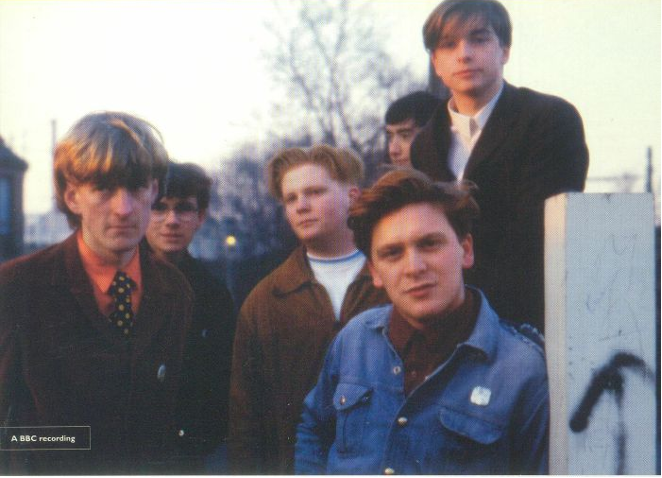
Glasgow is recognised globally for its thriving music scene. Venues like Barrowland Ballroom and King Tut’s, new-wave and synth pop classics like Bronski Beat and Aztec Camera, and rock hitmakers like Franz Ferdinand and The Fratellis are celebrated, but the city’s best bands were closely interconnected during its indie scene’s foundational years.
At the heart, The Pastels – jangly, quirky, alternative, revered by Kurt Cobain and foundational to an emerging anorak-pop scene. Beyond the band’s own achievements, frontman and songwriter Stephen Pastel co-founded in 1985 the now famed record label 53rd & 3rd, which was central in launching the careers of favourites like Belle and Sebastian and The Jesus and Mary Chain. This label also saw friends of The Pastels’first releases in The Vaselines and BMX Bandits, leaving the emergent scene three-strong.
The following year, the NME’s infamous and eclectic C86 compilation tape released, featuring the newest bands from independent British labels and spawning new global understandings of indie music in its diversity and inclusiveness of sounds and identities. Alongside The Pastels and Creation Records’ Primal Scream,fronted by former Mary Chain drummer Bobby Gillespie, Glasgow was represented in the C86 era by a collection of overlapping Bellshill 53rd & 3rd bands.
When Glasgow’s short-lived The Pretty Flowers disbanded in 1985, its members remained close and marched on – if they reformed today, they’d be a Glasgow indie supergroup. Frances McKee joined forces with Eugene Kelly as the songwriting duo behind The Vaselines, given their name by Stephen Pastel. Duglas T. Stewart formed and fronted BMX Bandits from the ashes of The Pretty Flowers while Norman Blake did the same for Boy Hairdressers, with the pair of school friends also contributing to each other’s bands. While part of Boy Hairdressers, Sean Dickson went on to form the Soup Dragons.
By the time Blake formed Teenage Fanclub in 1989, sharing songwriting duties with Gerard Love and fellow former Boy Hairdresser Raymond McGinley and reaching some of the scene’s greatest commercial and globally critical heights, a Glasgow indie scene consisting of one wide extended social circle had been firmly established. Today, when these groups gig, they’re often on the same bill as not only one another, but increasingly alongside emergent younger names – The Cords and Radhika – whose inspiration from the scene has accelerated to collaboration.
Sonically, the influence is immediately apparent, and both bands wear it on their sleeves – The Cords’ ‘Yes It’s True’ sees The Vaselines’ overdriven four-chord progressions, Radhika’s ‘Starry Eyes’ features Fanclub-esque harmonies delivered by the band’s own Gerard Love, and both consistently implement smooth vocals with jangly guitars akin not only to The Pastels, but also poppier Glasgow groups of the C86 era such as Orange Juice and Strawberry Switchblade.
The Cords’ and Radhika’s emergence has been bolstered by gigging with their heroes in 2025. The Cords supported The Pastels over summer on their first tour since 2019, as well as supporting The Vaselines and Camera Obscura at Kelvingrove Bandstand in June, while Radhika has gigged with Norman Blake in her residency at Paisley Arts Centre and released a single with Teenage Fanclub’s and The Pastels’ Gerard Love and Mitch Mitchell.
Having interviewed Radhika, she confirmed that the inspiration of the local scene was foundational to her beginning to write music. While enjoying music of all sorts from an early age, watching the 2017 Teenage Superstars documentary covering the scene ‘changed [her] life,’ introducing bands who ‘made it’ coming from familiar backgrounds – their achievements are more tangible than inspirations like My Bloody Valentine or Ramones.
Participation in the arts is hindered by barriers of accessibility. Radhika acknowledged that the persistent audiences at her shows are ‘six music dads,’ where her online audience veers younger, citing the economic considerations of a young person’s decision to splash out on a gig. These barriers exist for creating art too – it’s expensive, it’s time consuming, it often isn’t rewarding or recognised, and crucially, small and local venues and centres for arts and culture ‘need more love’. Securing gigs through Pastel’s Monorail, gaining recognition from local heroes, and establishing a ‘multi-generational artistic community’ audience, Radhika, The Cords, and countless other inspired young bands represent the persistence of a scene which, from the outside, appears cliquey, but in actuality constitutes a tight community acting as close-to-home catalysts constructing gateways for new talents in the face of an otherwise largely unsupported arts scene.


Leave a Reply to Tony McCrory Cancel reply