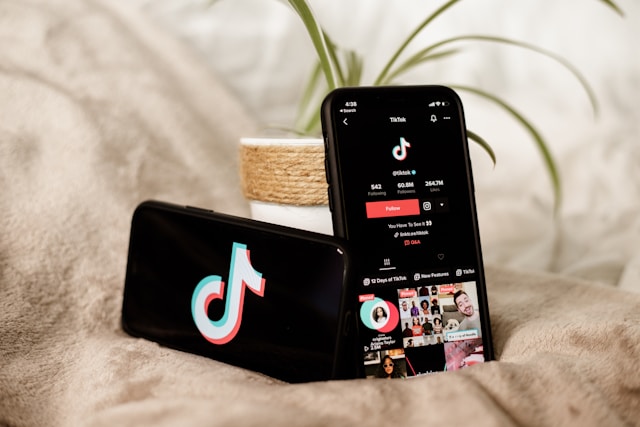
Its impact rivals the explosion of SoundCloud and streaming services, but with a crucial distinction. Where previous technological shifts disrupted distribution, TikTok transforms the entire lifecycle of music. It does not simply circulate songs; it catalyses them, condensing discovery promotion and audience consumption into a single algorithm-driven cultural moment.
As with earlier disruptions, familiar debates re-emerge. Yet the question now carries greater urgency: is TikTok genuinely democratising the music industry, or merely reshuffling the gatekeepers under the guise of accessibility? This tension underpins every aspect of TikTok’s influence on music today.
One of TikTok’s most significant selling points is its promise of a platform. Artists no longer need studio time, label backing, or marketing budgets to reach large audiences. A song recorded in a bedroom can now travel further than a traditional radio single ever could. In this sense, TikTok’s algorithm appears to replace industry executives, allowing music to rise on audience engagement rather than institutional approval.
However, this visibility comes at a cost. While TikTok can push a track into global consciousness overnight, such exposure is often fleeting and unstable. Unlike traditional artist development models, which prioritised long-term growth and audience cultivation, TikTok rewards immediacy and constant responsiveness. Artists are pressured to produce relentlessly to remain visible, risking burnout, creative disposability, and a loss of control over their output. Success becomes measured less by longevity than by sustained algorithmic relevance.
Speaking to Hillhead Review, Maria Hunt, an employee with the HYBE label, reflects on the dynamics behind artist visibility on TikTok. This follows the recognition of Katseye, a group represented by HYBE, who were awarded TikTok’s Global Artist of the Year in 2025.
Responding to questions about the role of viral trends in that success, Hunt explains that “viral trends don’t just ‘promote’ a song anymore, they activate it. It extends the life of the song, pushes it into new audiences and gives fans a way to participate instead of just listen. I do think short form engagement becomes more and more integral, not necessarily because artists want it to be but because attention is the currency. The smart move is treating short form as a layer of storytelling, not the entire point.”
Increasingly, songs are expected to perform not only on streaming platforms or through physical sales, but on screens. They must be instantly recognisable and easily adapted to trends. Music is no longer written simply to be heard, but to be used. This shift is evident in how artists discuss their own creative process, with some openly using TikTok as a real time testing ground. Rising artist Sombr, who gained early traction through TikTok, has spoken candidly about the platform’s role in shaping his work.
In December 2025 he shared that often he will not have a song finished when it is “flashed” on TikTok, allowing him to A/B test in real time and refine based on audience response. While this approach offers unprecedented immediacy and feedback, it has also prompted criticism, with some arguing that this risks turning music into a strategic exercise rather than an artistic one.
At the centre of this shift sits the now-dominant “15-second hook”, which has become a driver of promotion, fragmenting songs into highly marketable components for TikTok’s short form videos and trends. Critics argue that TikTok’s emphasis on short-form content elevates the 15-second hook as the primary promotional unit, risking the erosion of music as a cohesive art form.
This concern is heightened by the decline of album releases and the dominance of single-driven output and shorter EP formats. This trend-based promotion encourages rapid turnover, where artists and sounds can rise and disappear at breakneck speed, perpetuating a culture where music appears to be disposable, mirroring the logic of the fast fashion industry.
However, this interpretation risks oversimplifying listener behaviour. While TikTok promotes music in a fragmented, algorithmic manner, it can also function as a point of entry. Research from MRC Data, published by TikTok, indicates that 75% of users discover new artists on the platform, while 63% hear music they have never encountered elsewhere. Fragmentation does not necessarily prevent deeper engagement, but it reshapes how that engagement begins.
Economically, TikTok has shifted the balance of power without dismantling it. While the platform has lowered some traditional barriers to entry, it has also introduced new forms of dependence. As Maria Hunt notes, “Artists are now navigating a system where visibility is shaped less by traditional industry approval and more by a new set of gatekeepers: the algorithm, platform metrics, influencer ecosystems and sometimes even “creator culture” itself. Hence, dependence hasn’t disappeared, it’s moved.”
The importance of major labels appears to have shifted to sustaining and driving this “breakthrough moment”. Infrastructure, creative development, touring, and long-term narrative building remain difficult to sustain without resources and strategy. TikTok can light the match, but building the fire still requires scale and support.
Hence, TikTok can be situated as a force of transformation rather than comprehensive replacement of the music industry’s structure, offering unprecedented visibility while demanding constant responsiveness. The challenge for artists lies in navigating this hybrid system: learning how to use the algorithm without being ruled by it.


Leave a Reply