In September 2025, Zack Polanski was elected Leader of the Green Party of England and Wales with a stonking majority of 84.1% against his, quite frankly, boring rivals. Since then his Green Party membership has shot from around 55,000 to over 226,000 members, the party has won the Gorton and Denton by-election, and the party has achieved a media interest of a major party.
The Greens are indeed in a far better position than they were prior to Polanski being elected leader, however the party’s fortunes seem to have become slightly less bright than the hay-days of February this year. There are plenty of dark clouds in the sky for English and Welsh Green members; the Party now hovers at 8-13% in UK opinion polling, on par with the Lib Dems, and his personal ratings are now lower than those of all of Andy Burnham, Kemi Badenoch, and Ed Davey.
Then again, people don’t really tend to have any opinions on Ed Davey, and the same goes for all previous leaders of the Green Party.
At least people have an opinion on Zack Polanski.
It is for this reason that the fortunes of Zack Polanski and his party could likely change for the better in the excitement, attention, and enthusiasm of a General Election campaign, and as Andy Burnham’s likability falters (as incumbents tend to). Zack Polanski has established himself and his party as a well-known force that is listened to, with eye-catching policies and a distinct political identity.
The difficulty is though that his Greens can no longer say with confidence that they stand to ‘replace Labour’. The sun is yet to come through the clouds.
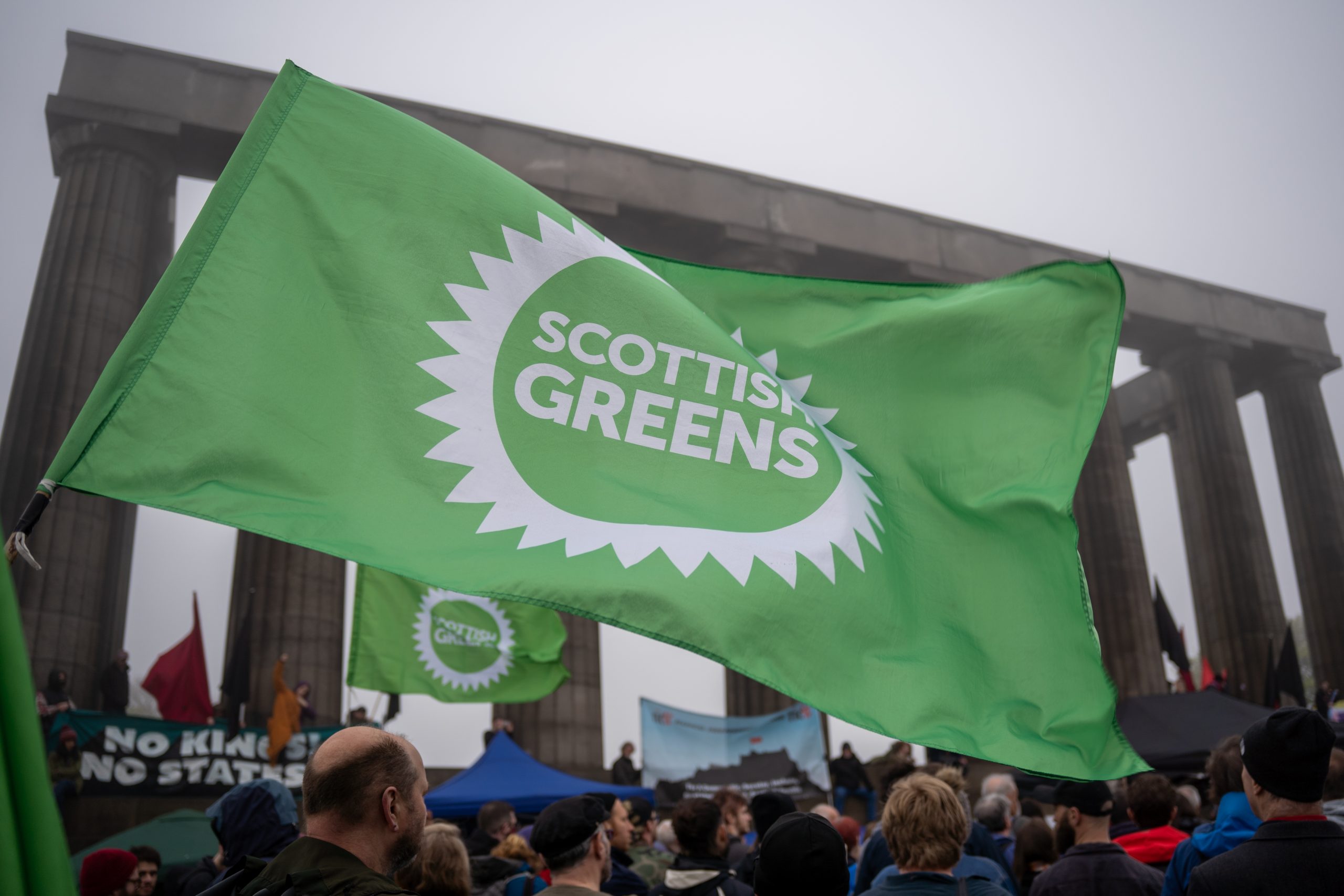
The Scottish Green Party on the other hand is enjoying brighter days after achieving a 6% swing and gaining 7 new MSPs in May’s Scottish Parliament election. Young new Scottish Green MSPs Iris Duane (who graduated as a University of Glasgow student while a sitting MSP this year) and Q Manivannan are a testament to this, bringing a new generation into the elected ranks of the party and to the Scottish Parliament generally.
A generally accepted rule of electoral politics is that junior parties entering coalition with larger parties tend to fare badly, pointing to the Liberal Democrat-Tory coalition and those across Europe. The Scottish Greens have bucked this trend after entering and leaving a coalition with the SNP from 2021 till 2024. During this time the party credits itself with negotiating Free-Bus Travel for all under-22s, enhancing Renters Rights, and extra climate funding – all of which it capitalised upon successfully in its most recent election campaign.
All is not completely rosy however.
The surge in polling for the Green Party started in around September of last year, coinciding with the election of Zack Polanski in England and Wales. It is difficult to say how closely, but the fortune of the Scottish Greens is linked to the fortunes of Zack Polanski and the Green Party of England and Wales – the Scottish Greens even using Zack Polanski in its Scottish Parliament campaign.
Green Party co-leaders Ross Greer and Gillian Mackay have nowhere near the profile, and lack the same charisma and media ability as Zack Polanski. In this way Polanski both draws attention away from the Scottish Green leaders, and shines a light on their comparable lack of ability.
However, this can also work to their advantage – not tied to any one leader, the party is able to stand on its policies and achievements rather than having that attention drawn away to the personality of one person. This is something that puts the party in a more stable position.
Talking of policy, across the entirety of the Scottish Parliament election there was a resounding lack of media interest in the actual policies of any of the parties. So on the other hand, in a situation where Green policies were held to the spotlight in future electoral tests, some such as decriminalisation of all drugs and the scrapping of all high stakes school exams might prove a significant electoral hindrance.
The Scottish Greens go to the polls in May as Scotland holds local elections. They are in a position where they could win control of Edinburgh City Council.
Only time will tell.