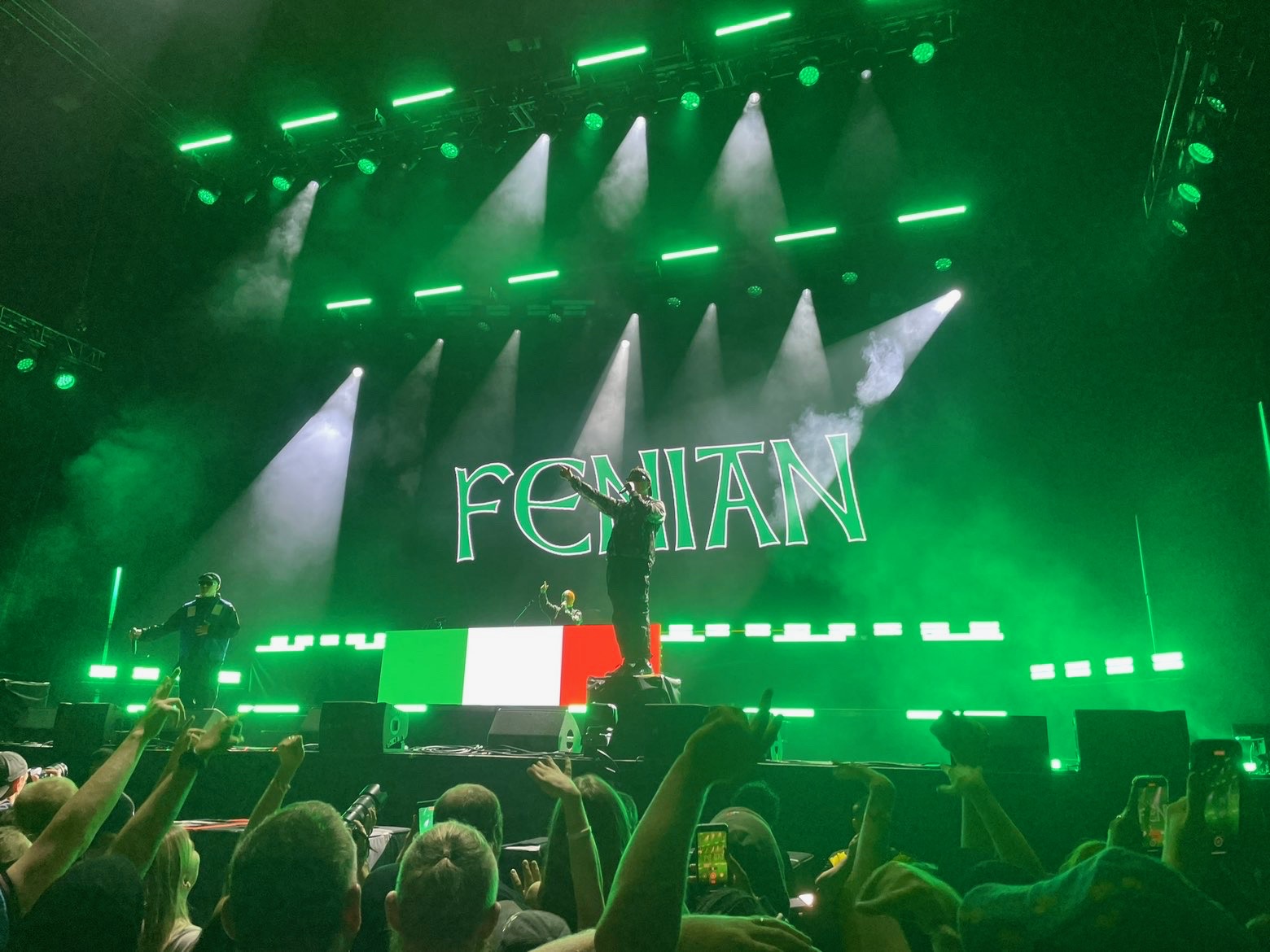
Liam Óg Ó hAnnaidh, also known as Mo Chara, and one third of the group Kneecap, was charged with a terrorism offence for allegedly showing support for Hezbollah at a London gig in 2024. According to Kneecap, this was part of a coordinated “smear campaign”, a “distraction from the real story”, due to their support for a free Palestine, and opposition to Israel’s treatment of Palestinians. The high-profile case was thrown out on a technicality. At all of their recent gigs, the group have made a point of using their platform to speak out about the issue. Among Northern Irish nationalists, there has been solidarity with the Palestinian cause for decades. Whereas in loyalist areas, it was not uncommon to see Israeli flags, among others, on lamp posts.
Another investigation took place due to their comments on stage in 2023, specifically “The only good Tory is a dead Tory. Kill your local MP.” While this was intended as dark humour, it was insensitive given the murders of Jo Cox and Sir David Amess. The incident did not lead to any charges, and Kneecap later apologised to the families of the MPs who lost their lives.
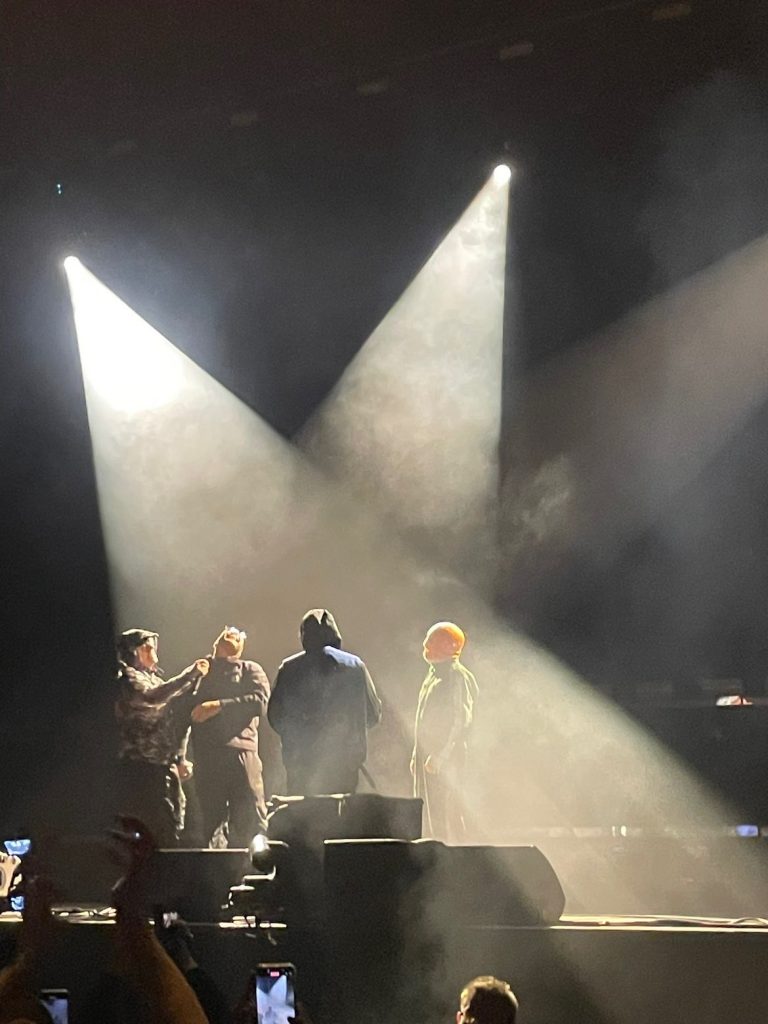
Many readers may not have heard of Kneecap before the recent headlines, so this article will give some context for why they have gained popularity over the past few years. Kneecap have been celebrated for their charisma and candour, and for their use of Irish in their music. Music that is often inspired by their lives in working-class communities as “ceasefire babies”; a term for those born at the tail end of the Troubles, particularly after the 1994 ceasefire.
Their very name is a reference to the “community policing” method used by paramilitaries, mostly during the Troubles, to punish crime or anti-social activity.
Some commentators object to their tongue-in-cheek references to illicit drugs and the IRA; it is safe to say they are not everyone’s cup of tea. Since their formation in 2017, they have often been given the “golden PR coin” of being condemned by several politicians for their provocative lyrics. Their very name is a reference to the “community policing” method used by paramilitaries, mostly during the Troubles, to punish crime or anti-social activity.
Additionally, the West Belfast group have attracted, even courted, the attention of the British press before. A notable example being when Kemi Badenoch, as UK Business Secretary, blocked a £15,000 arts grant that Kneecap had applied for in 2023. The decision was made because of the group’s republican views. Yet, in a “victory for freedom of expression”, Kneecap won their case against the government. In a symbolic move, the money was then split between two youth organisations in Belfast; one based in a predominantly Catholic area and the other in a predominantly Protestant area.
Amid the controversies, the band reached new heights of success. This included a sold-out show at New York’s Bowery Ballroom in 2023. Then came the semi-fictional film ‘Kneecap’ in summer 2024. It won the Audience Award at the Sundance Film Festival and was the first Irish-language film to do so. In their acting debuts, the trio stars as themselves in a dark satirical story about their origins. The members of Kneecap are fluent in the Irish language; one of them even grew up speaking it at home. By contrast, despite being Irish, I personally never had the opportunity to learn any Irish. Presumably due to tight budgets, my secondary school’s modern languages department was limited to French and Spanish.
One of Kneecap’s aims is to increase interest in the Irish language through their music.
Growing up in Derry, identity regarding religion and culture is something I was aware of from a young age, and language is an integral part of cultural identity for many. One of Kneecap’s aims is to increase interest in the Irish language through their music. Unsurprisingly, the history of Gaeilge is inseparable from Ireland’s colonial history. Its decline was a complex process, but my understanding is that, by the 19th century, English had become the language of government and commerce, particularly in urban areas. Therefore, it had become necessary for employment opportunities and social mobility. The Great Famine was also a significant factor. However, Irish remains a living and breathing language; in recent years, there has been an increased interest in the language among young people. Some progress was made in protecting the language when, in 2022, the Identity and Language (Northern Ireland) Bill was passed. This meant the creation of an Office of Identity and Cultural Expression, as well as the appointment of an Irish Language Commissioner and an Ulster-Scots commissioner.
In short, Kneecap has gained a lot of attention over the past year due to the controversies about their political statements. Nevertheless, the music itself is deserving of airtime, particularly the 2024 album Fine Art. As a Fontaines D.C. fan, my favourite song from the record is Better Way to Live. It remains to be seen how Kneecap’s future will pan out; many people think they have crossed a line with their rhetoric. Yet, it is likely their careers will outlive the controversies due to their significant fan base, which is cross-community. Moreover, they have the support of other artists such as Fontaines D.C, CMAT, Christy Moore, Primal Scream, Pulp, Bicep, and more.